
Customer Service Hotline:
+8613261677119
+8613261677119
Cloud Fire Alarm Monitoring Platform | Wanlin Fire · Practical Product and Application Information
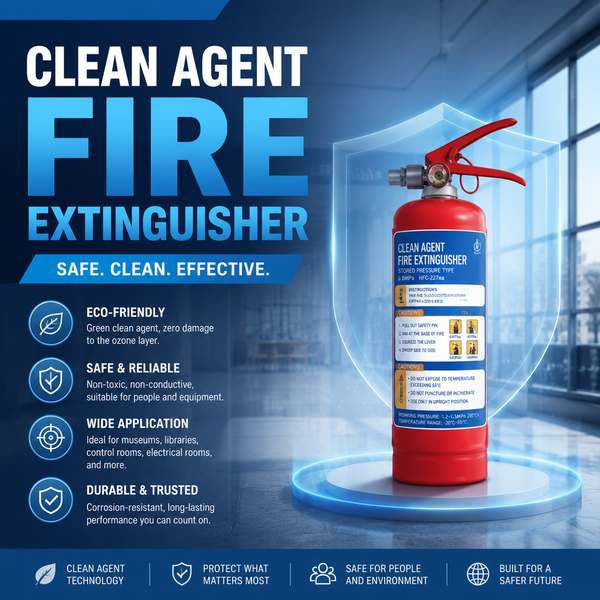
Define an FK-5-1-12 clean agent fire suppression system using hazard, enclosure, agent quantity, cylinders, piping, detection, release controls and acceptance requirements.
Review relevant products, system options, application guidance, project support, and pre-sales or after-sales services.
Compare the application scenario, functional requirements, installation environment, interfaces, communication method, quantity, and project schedule.
Confirm model numbers, technical parameters, certifications, delivery terms, and compatibility against current product documents and agreed project requirements.
Define an FK-5-1-12 clean agent fire suppression system using hazard, enclosure, agent quantity, cylinders, piping, detection, release controls and acceptance requirements.
Use the published product information to shortlist a model, then verify the current datasheet, protocol, power supply, certificate scope and destination requirements before specifying or purchasing.
An FK-5-1-12 clean agent system is an engineered fire-suppression arrangement that stores and discharges agent through a designed cylinder, valve, pipe and nozzle network. Selection is based on the protected hazard, enclosure, design concentration, discharge arrangement and applicable approval process—not on a generic product keyword.
| Element | Engineering input | Evidence to retain |
|---|---|---|
| Protected enclosure | Volume, leakage, openings, temperature and altitude | Survey, drawings and enclosure data |
| Agent supply | Required quantity, cylinder size and reserve strategy | Calculation and cylinder schedule |
| Distribution | Pipe route, fittings, nozzles and discharge time | Hydraulic calculation and installation drawing |
| Detection and release | Detection logic, manual release, abort and delay | Cause-and-effect matrix |
| Safety interfaces | Alarms, ventilation shutdown, pressure relief and access control | Interface schedule and commissioning record |
Do not infer approval from an agent name or a marketing page. Verify the exact cylinder, valve, nozzle, releasing panel and system configuration against current documents required by the destination market and authority. NFPA, ISO, EN, UL, FM or other references are project inputs unless a supplied document explicitly proves scope for the ordered equipment.
No. The calculation requires enclosure volume and other project inputs, including hazard, temperature, altitude, concentration and system design criteria.
No. Final pipework, nozzle selection, agent quantity and discharge performance require an engineered calculation and project approval.