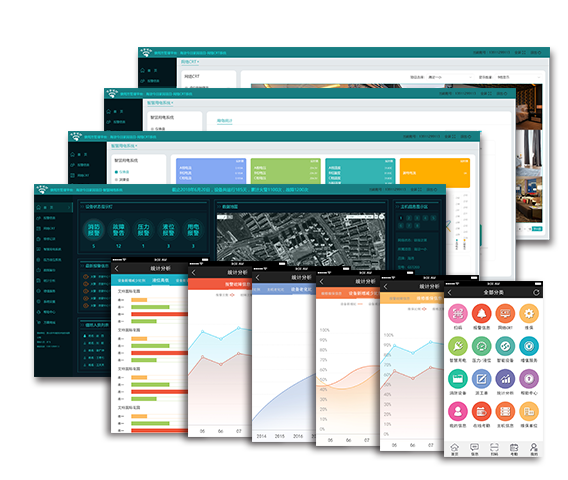
Fire Cloud Platform System - Fire CRT
The Fire Management Cloud Platform is jointly developed by integrating internet technology, cloud data processing systems, big data analytics, and a professional R&D team with extensive experience in the IoT industry. It addresses the limitations of traditional fire alarm devices, such as restrictions on wired network deployment, coverage range of fire alarm panels, signal transmission distance, hierarchical management bottlenecks, and single-channel alarm information transmission.
With sophisticated algorithms, the platform independently conducts analysis and judgment, presents multi-graphic displays, and evaluates the overall status of equipment and facilities, management efficiency, as well as the performance comparison of alarm devices across different locations. It provides SaaS, big data, and AI services for traditional enterprises, facilitating their digital transformation and upgrading.
查看更多案例
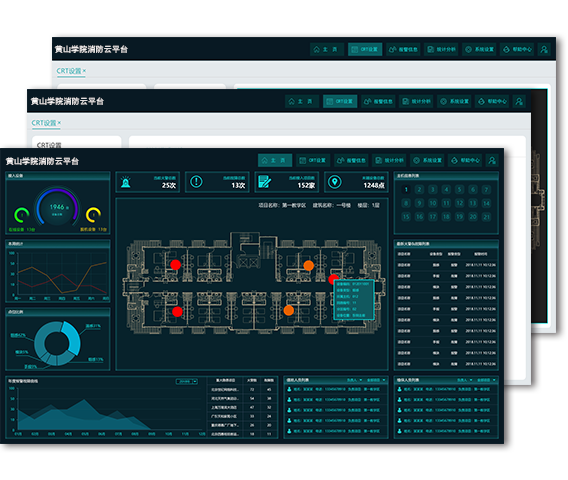
Fire Cloud Platform System - Fire CRT (Intranet Version)
The centralized customer management cloud platform adopts a B/S architecture and supports wireless hierarchical access. Users, operation and maintenance parties, maintenance parties, fire departments and other relevant users can log in independently (with multi-interactive pages) to maintain their own company information, add, supplement and update alarm points and floor plans, and perform point mapping by themselves to ensure the real-time performance of all information; local parties can handle and report fire alarms independently, reducing the work intensity of the remote supervision center.
Through dual-server cluster and disaster recovery mutual backup technology, it has high reliability, is easy to add databases and access terminals, and has high platform scalability. It truly realizes full local fire-fighting networking without restrictions, achieving unified and centralized management.
查看更多案例
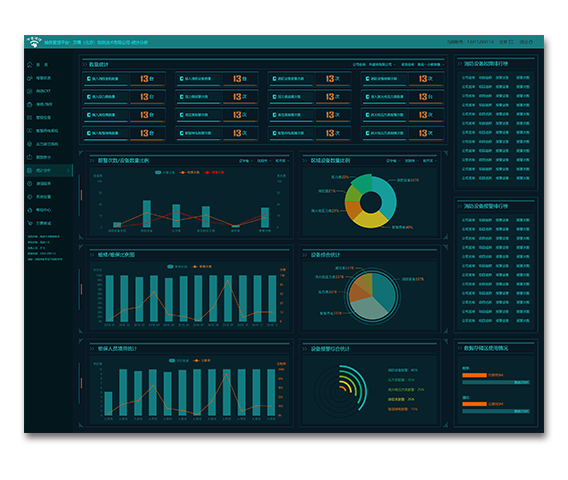
Fire Maintenance and Operation Cloud Platform (Remote Supervision Version)
The network version of the fire CRT adopts a color monitoring system constructed from the bottom layer, endowing it with excellent scalability and extensibility. It is suitable for network-distributed applications and realizes network monitoring. The system uses APIs to realize communication between the monitoring terminal and the server, providing customers with a unified set of operation interfaces and event interfaces to make service operations transparent.
The system monitoring interface is elegant and generous, highlighting the GPS positioning of monitoring content. It is easy to operate and suitable for users of different groups.
查看更多案例
 Smart Fire Protection _ 4G-IoT Smoke Detectors _ Centralized Fire Alarm Panel Networking _ Wireless Fire Alarm System _ Wireless Pressure & Liquid Level System - Wanlin Cloud Provides Smart Fire P